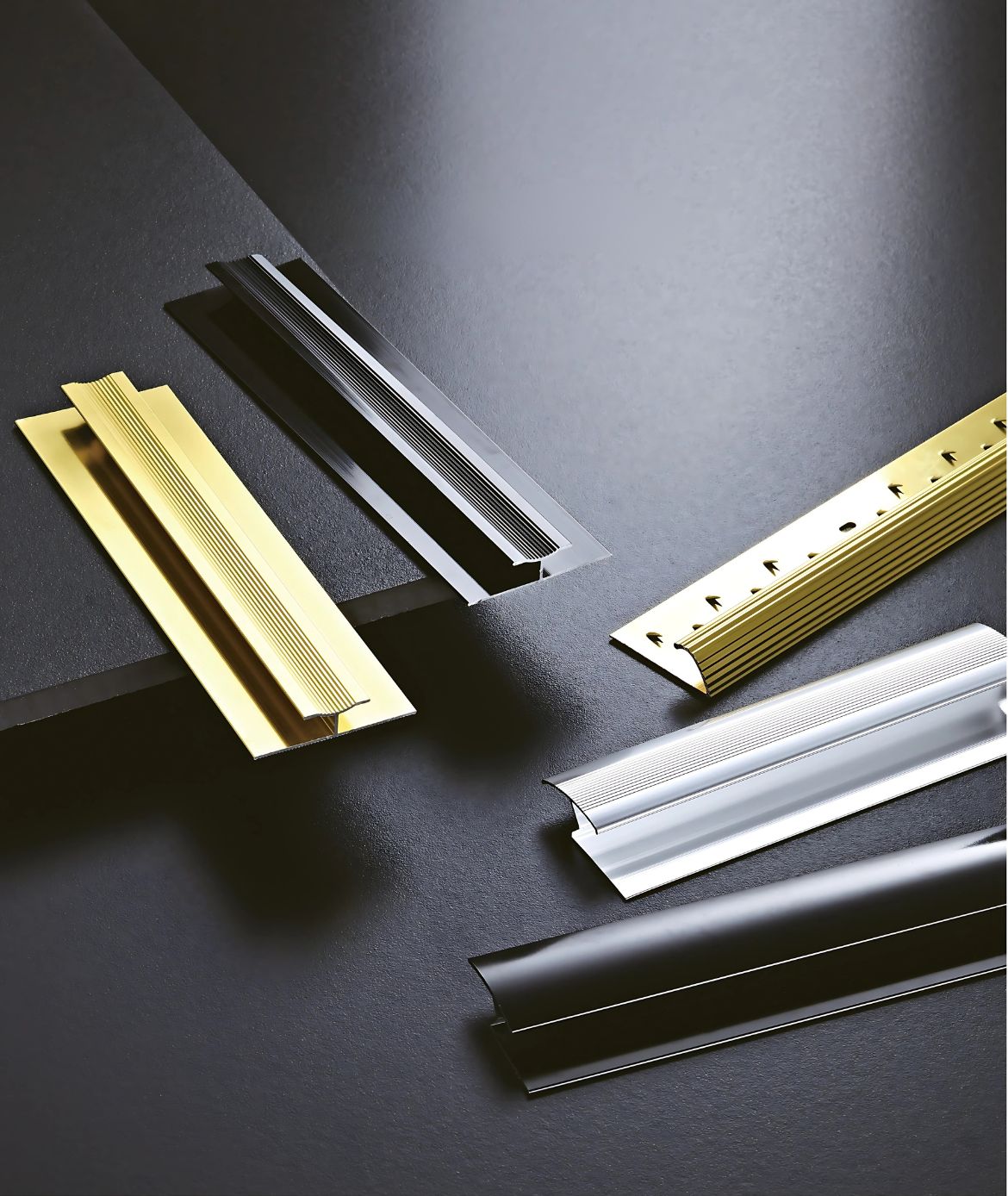

When it comes to achieving a flawless tile installation, tile trim plays a crucial role—not just for aesthetics but also for durability and protection. Whether you’re a DIY enthusiast or a professional tiler, understanding the types of tile trim, their applications, and how to choose the right one can elevate your project from good to outstanding.
In this guide, we’ll dive deep into the world of tile edge trim, explain where and how to use them, and share practical finishing tips to help you create clean, safe, and stunning tile edges.
What is Tile Trim and Why Is It Important?
Tile trim refers to specialized profiles designed to protect, finish, and decorate the exposed edges of tiled surfaces. These trims prevent tile edges from chipping, cover uneven cuts, and provide a smooth transition between different surfaces or materials.
Without proper tile trim, tiled corners and edges are vulnerable to damage and moisture infiltration, which can compromise both the look and longevity of your tile work.
Types of Tile Trim and Their Uses
| Product Name | Profile Type | Description | Typical Use Cases |
| Aluminium Straight Edge Trim | L-shaped | Clean 90-degree finish, protects exposed tile edges | External corners, wall/floor transitions |
| Aluminium Round Edge Trim | Round edge | Soft curved profile, eliminates sharp edges | Bathroom/kitchen walls, child-safe spaces |
| Aluminium Square Edge Trim | Square/straight edge | Sharp and sleek profile for contemporary finishes | Floors, countertops, feature walls |
| Aluminium Internal Trim | Inner corner | Designed for inner wall-to-wall or wall-to-floor joints | Bathroom/kitchen inner corners, splash zones |
| Aluminum Expansion Joint | T-shaped (functional) | Absorbs tile movement, prevents cracking from temperature shifts | Large tiled areas, commercial flooring |
| Aluminium illuminated Profile (LED) | U-shaped (with diffuser) | Integrated lighting with frosted diffuser for ambient riser or wall lighting | Stair risers, accent lighting on walls/floors |
| Aluminium Profile for Glass Mounting | L/U hybrid | Secure glass panels in tiled enclosures | Shower screens, glass walls, partitions |
| Aluminium Skirting | Square edge | Covers wall base elegantly, protects from moisture and scuff marks | Bathroom walls, modern interiors, commercial use |
| Aluminium Stair Nosing | L-shaped (safety grip) | Slip-resistant nosing, compliant with safety standards | Staircases, commercial/residential steps |
| Carpet Trim | Z-shaped | Connects tile to carpet or uneven surfaces with height difference | Doorways, living room transitions |
| Corner Guard | L-shaped (reinforced) | Protects external wall corners from impact | High-traffic areas, hospitals, schools |
| Listello | U-shaped decorative | Slim border trim for visual break or patterning | Bathroom walls, backsplashes, feature tile lines |
| Aluminium Transition Profile | T-shaped | Smoothly bridges same-level floor surfaces | Hallways, tile-to-tile transitions, large open areas |
🔗 Achieve a professional 90-degree finish with Aluminium Straight Edge Trim
🔗 Child-friendly curves with Aluminium Round Edge Trim for kitchens and bathrooms
🔗 Enhance staircase safety with anti-slip Aluminium Stair Nosing
🔗 Create seamless flooring links with Aluminium Transition Profile
Tile Trim and Corners: Finishing Tips
When working with tile trims and corners, it’s important to plan ahead by accurately measuring the tile thickness and corner angles before selecting the appropriate trim. Matching the materials is key to achieving a seamless finish—aluminum trims, for example, pair exceptionally well with ceramic and porcelain tiles. Proper installation is equally crucial; always use the recommended adhesives or mechanical fixings to ensure the trims stay securely in place over time. For areas exposed to moisture, such as bathrooms or kitchens, opt for trims that offer sealing features to protect against water damage. Finally, consider the aesthetic impact by choosing finishes and colors that complement your overall tile design—brushed aluminum can bring a modern, industrial vibe, while polished trims create a sleek, elegant look.
How to Choose the Right Tile Trim?
- Identify the Edge Type: Is it an external corner, internal corner, or a straight edge?
- Consider Environment: For moisture-prone areas, pick trims with sealing properties.
- Assess Tile Thickness: Select trims compatible with your tile thickness.
- Match Design Style: Coordinate trim finish with your tile style and overall room design.
- Durability Needs: High-traffic areas need more impact-resistant trims.
FAQ About Tile Trim
1. Can tile trims be used in wet areas like bathrooms?
Yes. For wet areas, choose trims with water-resistant properties or sealing capabilities to protect the edges and prevent moisture damage.
2. How are tile trims installed?
Tile trims are usually installed alongside the tiles using adhesive or mechanical fixing methods. Proper measurement and alignment are essential for a clean finish.
3. Can I cut tile trims to size?
Yes, most trims can be cut with a hacksaw or a specialized trimming tool to fit your project dimensions precisely.
3. Are there color or finish options for tile trims?
Absolutely. Tile trims come in various finishes such as brushed aluminum, polished chrome, or powder-coated colors, allowing you to match or contrast with your tiles.
4. Can tile trim be applied to existing tiles or only during new installations?
Tile trims are best installed during the tiling process for a seamless finish, but in some cases, they can be added afterward if the edges are accessible.
5. How do I maintain and clean tile trims?
Most tile trims, especially aluminum and stainless steel, can be cleaned with mild soap and water. Avoid abrasive cleaners to prevent scratching.
6. What if my tile thickness varies slightly—can one trim still work?
Some trims are adjustable or flexible to accommodate minor thickness differences, but it’s best to use a trim matching your tile thickness for optimal fit.
7. Are tile trims suitable for outdoor use?
Yes, but you should choose trims made from corrosion-resistant materials like anodized aluminum or stainless steel for durability in outdoor environments.
8. How do I fix a damaged tile trim?
Damaged trims usually need to be removed and replaced. Make sure to carefully remove adhesive residues before installing a new trim.
9. Can tile trim improve safety?
Yes, trims like stair nosings with anti-slip surfaces enhance safety by providing better grip on steps or edges.
Choosing the right tile trim can make a world of difference in your tiling project—both functionally and aesthetically. Whether you need protection on sharp corners, smooth transitions on curved surfaces, or moisture-resistant edges for kitchens and bathrooms, understanding the types of tile trim available will help you select the perfect fit.
Explore Tay Sheen’s comprehensive range of tile trims to find durable, stylish, and reliable finishing solutions tailored to your needs.